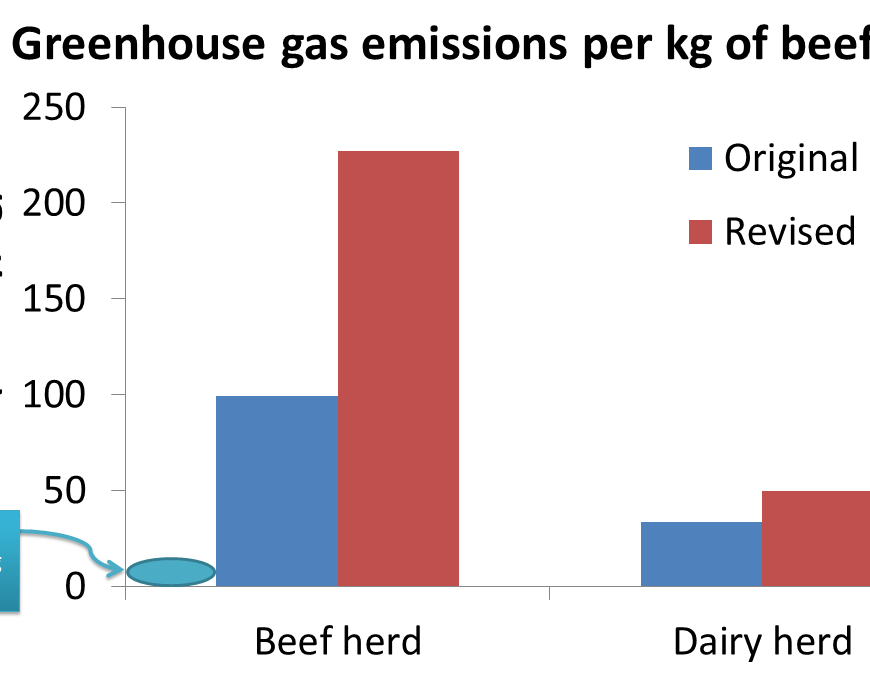

A chart shows revised carbon footprints for beef. Beef from a beef herd now has an estimated carbon footprint of 227 kg CO2eq / kg (up from 100). Beef from a dairy herd has a revised carbon footprint of 50 kg CO2eq / kg (up from 24). The chart also shows that "almost everything else" has a carbon footprint in the single digits or low double digits.

A mammoth adjustment to beef’s carbon footprint

This post examines a correction to a seminal paper by Oxford University scientists Poore and Nemecek on the environmental footprints of food. It shows that, of all the products we make, including the massive amounts of cement and steel used for construction, beef is categorically responsible for the most GHGs, by a very wide margin. Continue reading A mammoth adjustment to beef’s carbon footprint

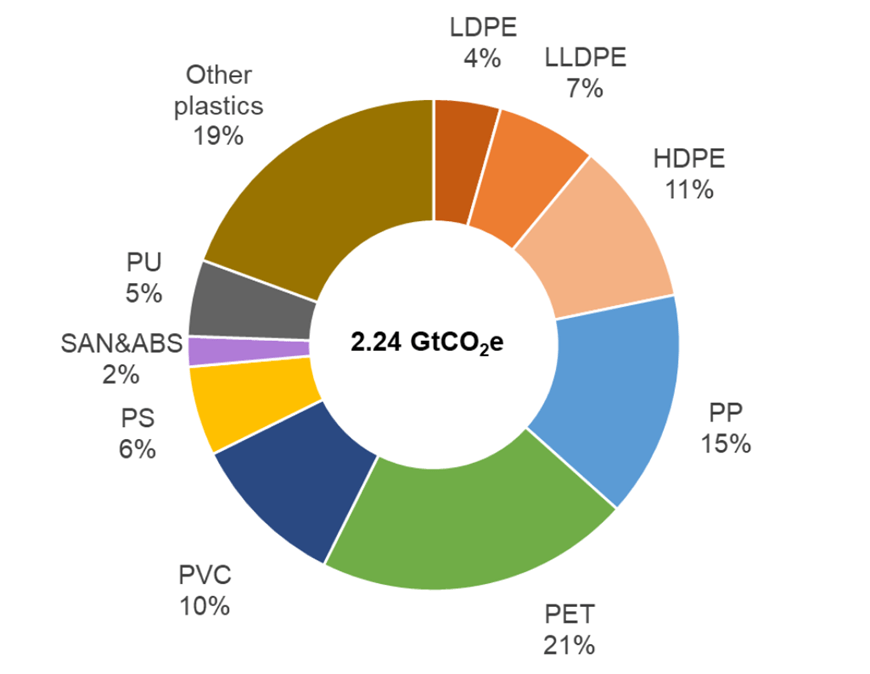
The carbon footprint of plastic production. A donut chart shows greenhouse gas emissions from plastic production in 2019 with a breakdown by plastic polymer type. Total GHG emissions are estimated at 2.24 billion tonnes CO2 equivalents. The plastics contribute to this total roughly in proportion to the amount of each plastic produced per year. Major contributors are polyethylene terephthalate (PET), polypropylene (PP), high-density polyethylene (HDPE), and polyvinyl chloride (PVC).

The astonishing carbon footprint of plastic production

Last year, scientists from Lawrence Berkeley National Lab reported that the carbon footprint of plastic production is around 2.2 billion tonnes of CO2-equivalents. That’s more than double previous estimates, amounting to more than 4% of global greenhouse gas emissions. If the plastics industry continues to grow at the current rate, it will be one of the biggest drivers of climate change by 2050. Continue reading The astonishing carbon footprint of plastic production

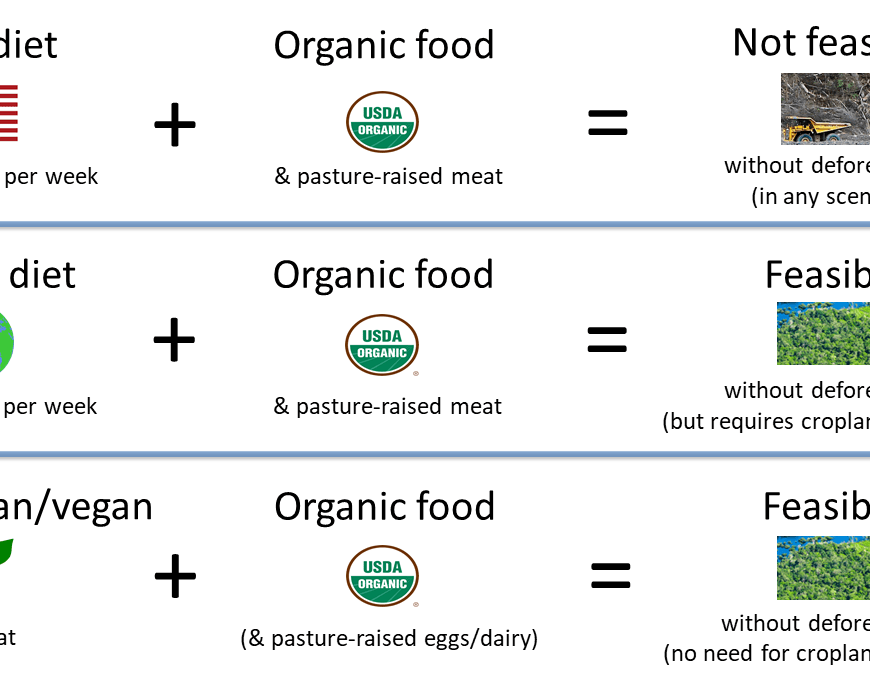
Various diets combined with organic agriculture - feasibility without deforestation. The image shows three scenarios. In the first, the rich diet (5.5. lbs. of meat per week) and organic food is not feasible without deforestation in any scenario. In the second, a global average diet (1.8 lbs. of meat per week) is feasible but only with cropland expansion. In the third, vegetarian and vegan diets and organic food are feasible without deforestation.

How to feed the world without further deforestation

A key research paper investigated whether we will be able to feed the human population in 2050 without further deforestation. The researchers examined 500 scenarios of food production (high-yield intensive agriculture versus lower-yielding organic) and consumption (various diets) to find out which scenarios do not require additional encroachment on forests. The details of which scenarios work and which don’t provide crucial guidance on our food shopping habits. Continue reading How to feed the world without further deforestation