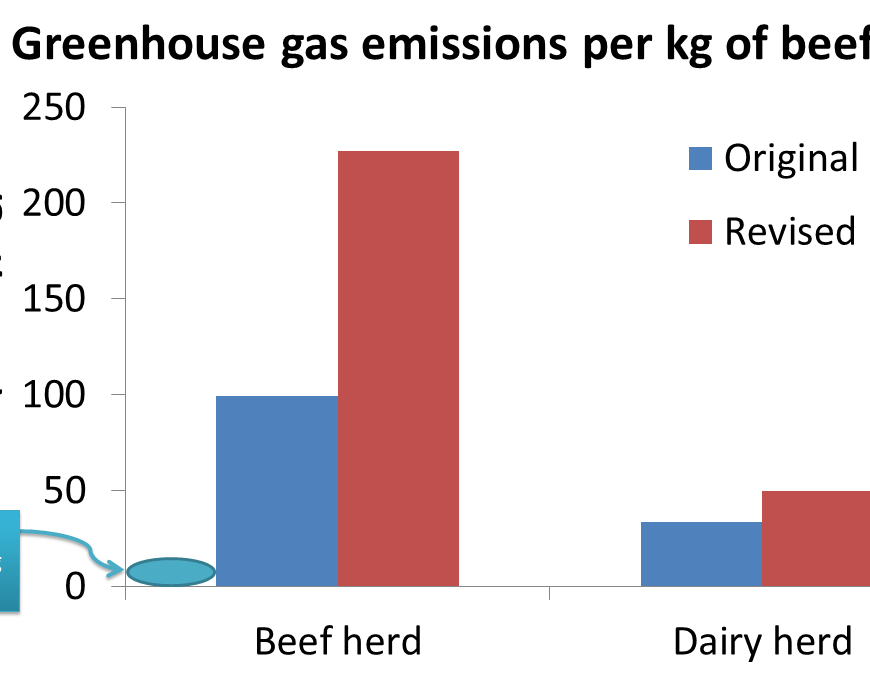
A chart shows revised carbon footprints for beef. Beef from a beef herd now has an estimated carbon footprint of 227 kg CO2eq / kg (up from 100). Beef from a dairy herd has a revised carbon footprint of 50 kg CO2eq / kg (up from 24). The chart also shows that "almost everything else" has a carbon footprint in the single digits or low double digits.

A mammoth adjustment to beef’s carbon footprint

This post examines a correction to a seminal paper by Oxford University scientists Poore and Nemecek on the environmental footprints of food. It shows that, of all the products we make, including the massive amounts of cement and steel used for construction, beef is categorically responsible for the most GHGs, by a very wide margin. Continue reading A mammoth adjustment to beef’s carbon footprint

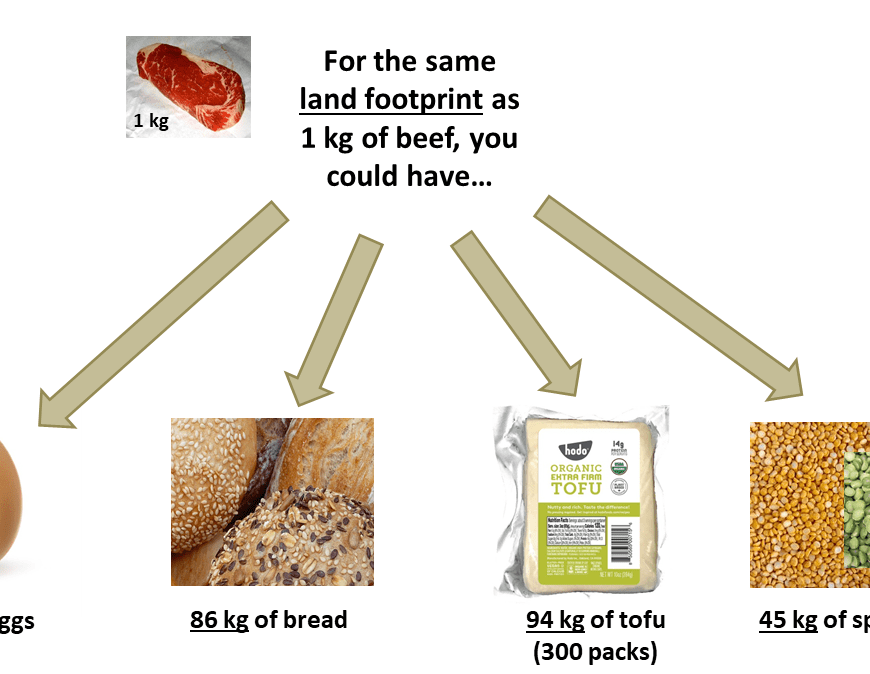
Comparing the land footprint of 1 kg beef to eggs, bread, tofu, and split peas. For 1 kg of beef, you could have 52 kg of eggs (1000 eggs), 86 kg of bread, 94 kg of tofu, or 45 kg of split peas for the same land footprint.

The environmental footprints of meat and other foods

As you probably know by now, the kind of food we choose to eat has a major impact on climate change, deforestation, pollution, biodiversity losses, water use, and food security. But the extent to which our various food options impact these environmental and social issues has, surprisingly, not been well-covered by the media. These details are obviously important for people who want to reduce their impact on the planet, but can’t immediately switch to a vegan diet (which includes most people). Continue reading The environmental footprints of meat and other foods

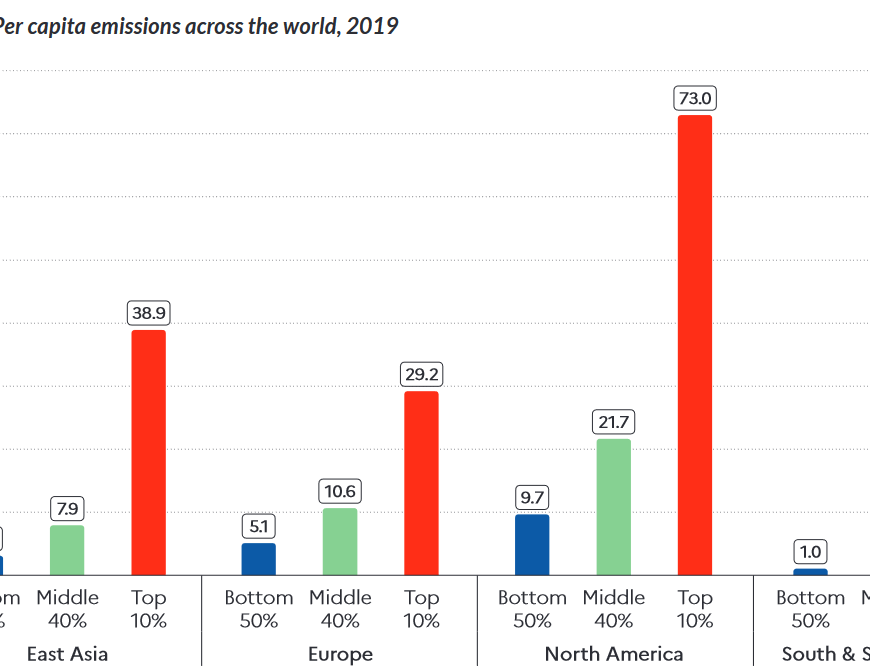
A chart from the World Inequality Report shows per capita carbon footprints by income for various regions of the world. The top 10% of earners in North America have the highest carbon footprints, at 73 tonnes of CO2.

Your most important resolution: 7 tonnes CO2

If there were an Oscars for planetary threats, climate change would sweep all the major awards. Interestingly, of all our threats, climate change is one of the most avoidable through individual action. To boil this individual action down to one immediate resolution, it would be to achieve a personal carbon footprint of 7 tonnes CO2 per year, or less. Continue reading Your most important resolution: 7 tonnes CO2

A civet (the animal that transmitted the SARS virus to humans) looking out from a tree on the left. On the right is a pangolin (the animal originally thought to have transmitted the virus that causes COVID-19 to humans) being released from a cage into the wild.

Coronavirus may be our best chance to save the planet.

If you’re anything like me, you’re probably approaching burn out on Coronavirus articles by now. Well, prepare yourself for more, from COVID-19’s impact on the economy to fluffy social media posts about how we are changing the way we work and live (Look how my hair has changed after two months of isolation! ). But there are two essential things that we should really be … Continue reading Coronavirus may be our best chance to save the planet.

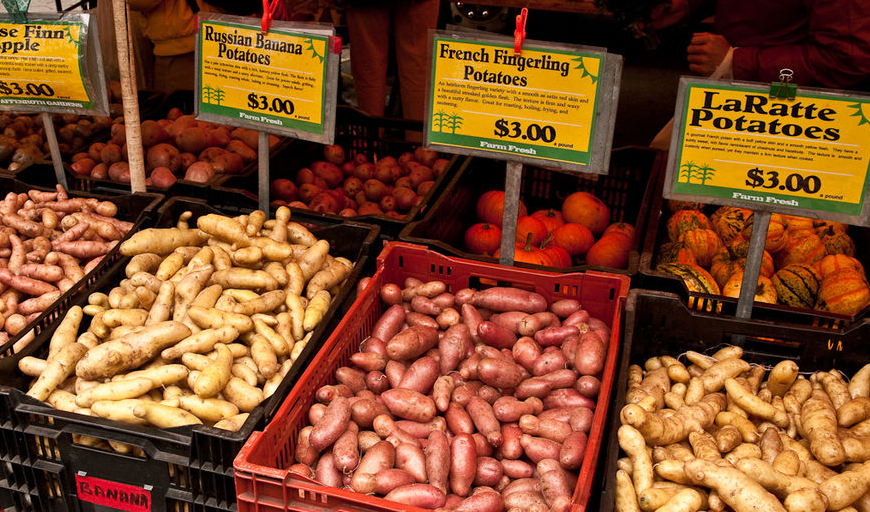
Are low-carb diets good for you? A photo of various varieties of potatoes in crates.

Are low-carb diets good for you? Sustainability and health benefits of carbs

Continuing on the theme of ethical consumerism and health, I’m going to take a look at the sustainability and health benefits of carbohydrates, and especially on the question of whether low-carb diets are good for you. But there’s a lot of material to cover, so I’m going to first look at scientific studies on low-carb diets and health.. Then, in the next couple of posts … Continue reading Are low-carb diets good for you? Sustainability and health benefits of carbs

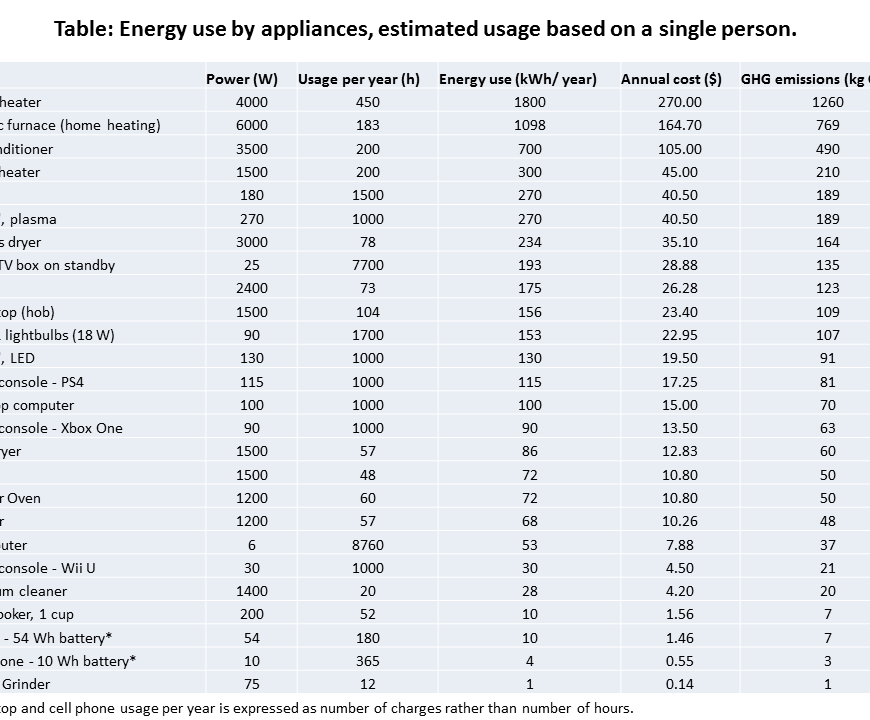
Daily Footprint, #7 –Home Appliances – How to calculate your carbon footprint

When purchasing (and reviewing) appliances it’s useful to know how much energy they consume: it may help you decide between different products and also give you an idea of whether energy efficiency is an important factor relative to other criteria. Continue reading Daily Footprint, #7 –Home Appliances – How to calculate your carbon footprint