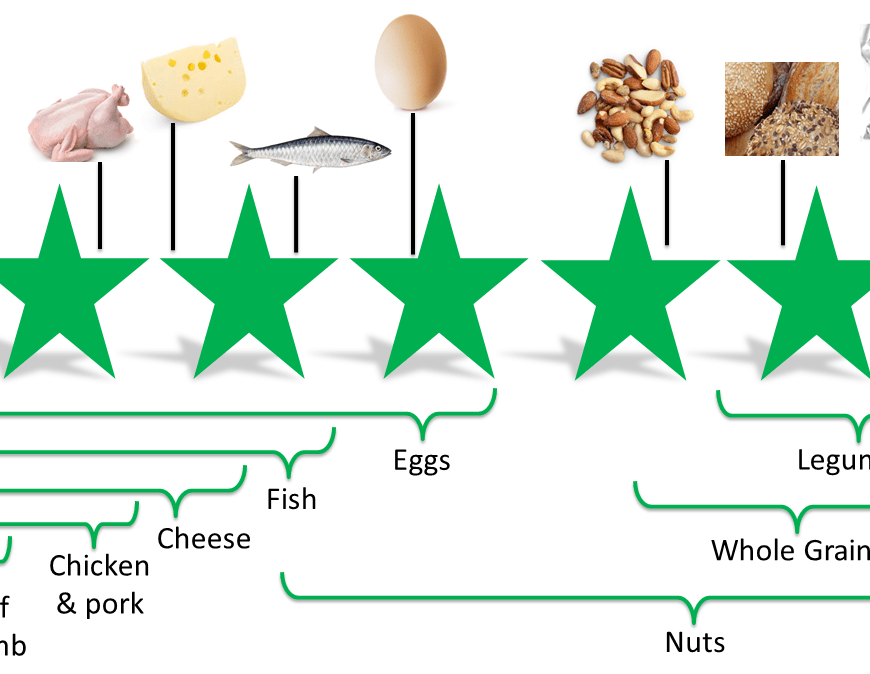
A graphic of 5 Green Stars is shown, with various protein-rich foods marked in at various points, representing an ethical rating for them. In order from lowest to highest, they are: Beef & Lamb, Chicken & Pork, Cheese, Fish, Eggs, Nuts, Whole Grains, and Lentils.

Sustainable Food: Ethical ratings for different protein sources

What’s the most ethical protein, brah? Last week I published a graphic showing different kinds of butter, dairy and non-dairy, ranked from 0 to 5 Green Stars. Following up on that, here’s a graphic showing ethical scores for various sources of protein in our diets. Continue reading Sustainable Food: Ethical ratings for different protein sources

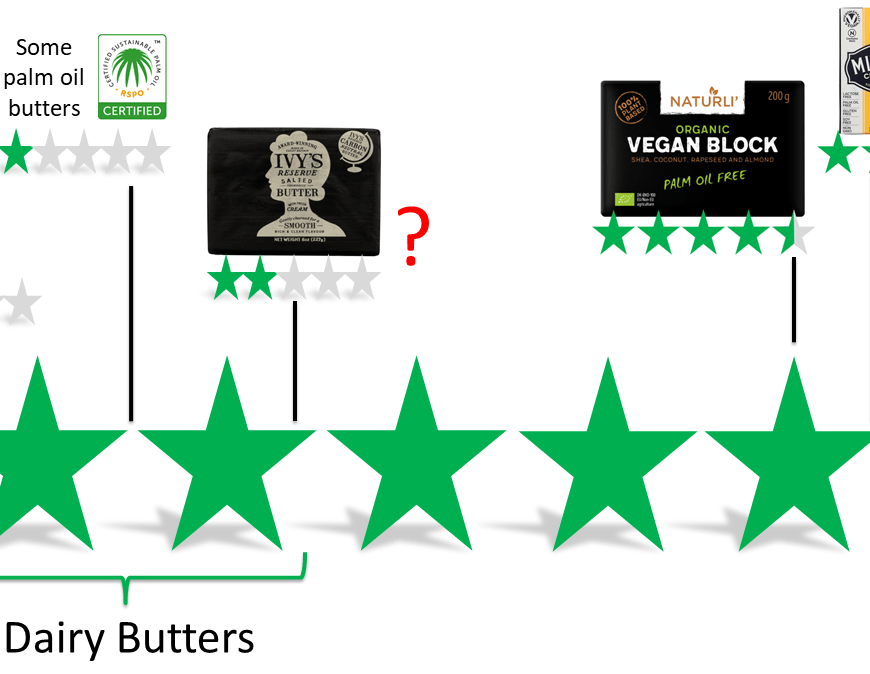
A graphic shows a range pf ethical ratings for various kinds of butter, ranging from 0 to 5 Green Stars. Butter from dairy cows score between 0 and 2 Green Stars. Butter from intensive dairies scores 0 Green Stars while butter from pasture-raised cows may score up to 2 Green Stars. Good plant-based butters (palm oil free) such as Naturli' and Miyoko's receive high scores of 4.5 and 5 Green Stars, respectively.

Butter: I can’t believe it’s not ethical!

I’m sharing a post from Ethical Bargains that evaluated Ivy’s Reserve carbon-neutral butter. UK-based Wyke Farms launched this butter in 2023, a year after releasing “the world’s first carbon neutral cheddar.” In the end, I scored Ivy’s Reserve butter 2/5 Green Stars for social and environmental impact and at the same time realized that this is close to the maximum score that I’d give a dairy-based butter product. Is this fair? Continue reading Butter: I can’t believe it’s not ethical!

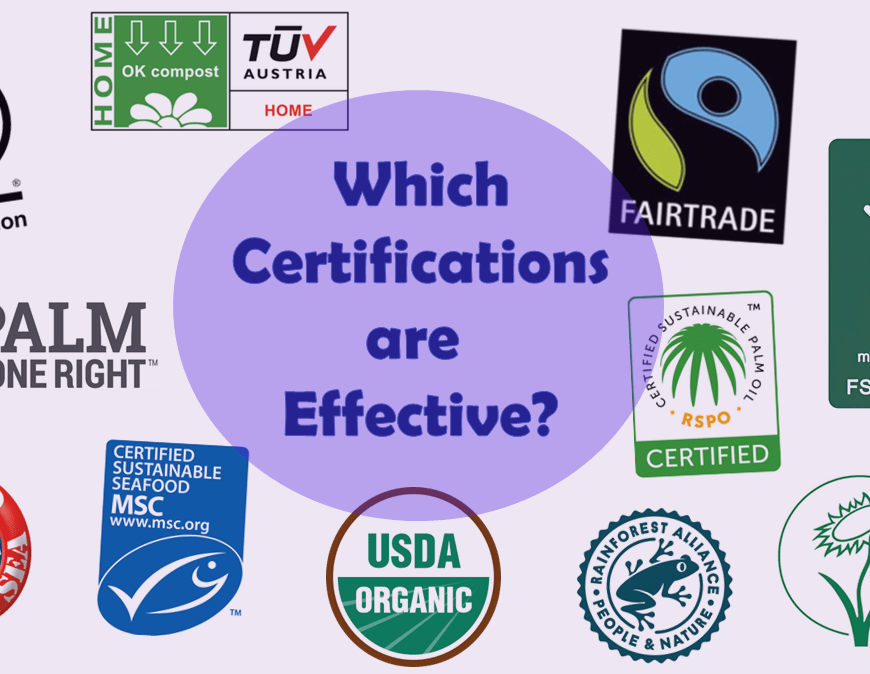
Text in the center reads: Which third-party certifications are effective? Surrounding the text are 11 ethical certification logos. B-Corp, compostable, Palm Done Right, Friend of the Sea, MSC, organic, Fair trade, FSC, RSPO, Rainforest Alliance, and vegan.

The GSP guide to third-party certifications

Which third-party certifications are effective and worth supporting? Third-party certifications can be a cornerstone of ethical consumption so it’s important to know which ones are effective – especially when governments don’t value the environment and allow corporations to run amok. Here’s a summary of eleven certifications that have been evaluated here on the Green Stars Project. Continue reading The GSP guide to third-party certifications

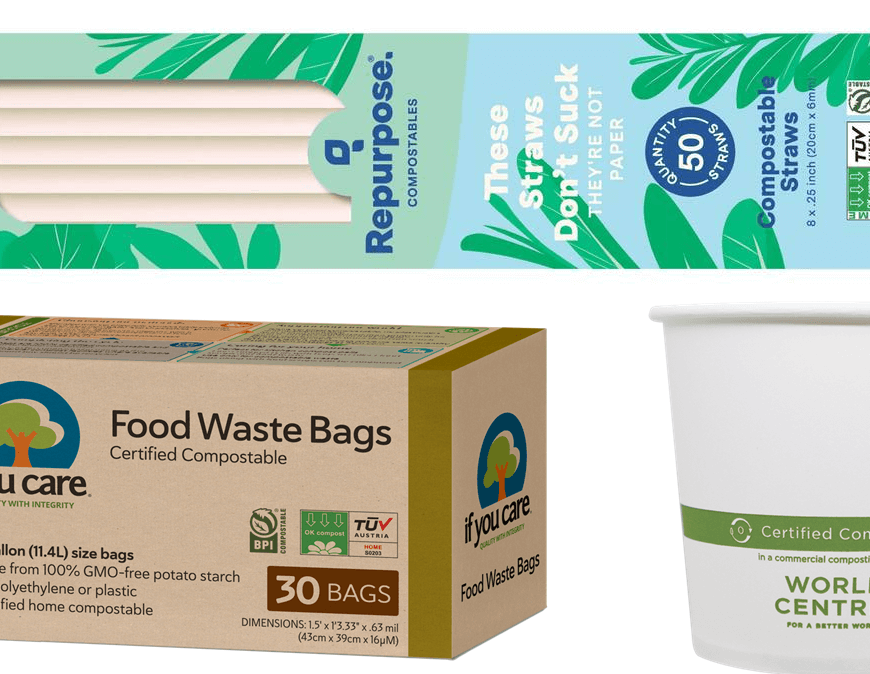
Three certified compostable products are pictured - a box of straws from Repurpose, a box of food waste bags from If You Care, and a compostable paper cup from World Centric.

The environmental impact of compostable plastics

Compostable plastics vary in their environmental footprints but some of them are significantly better than petroleum-derived plastics in key respects. Of course we need to use reusable items as much as possible, but the inherent benefits of compostable plastics suggest that they are worth backing. Continue reading The environmental impact of compostable plastics

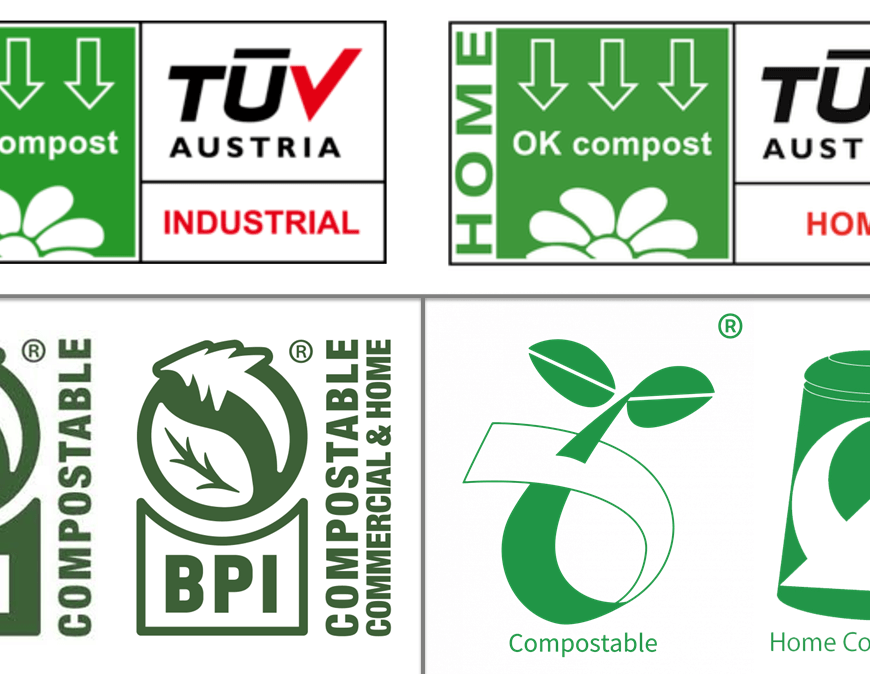
Certified compostable logos to look out for from TÜV, BPI and ABA. In each case there's a different certification and logo for home composting and industrial composting.

Certifications for compostable waste: which to trust?

In this post I take a look at certifications for compostable plastics (biodegradable bags, packaging, cups, utensils, etc.) and address their most common criticisms. We’ll also take a look at terms such as oxo-biodegradable and bio-based, so that by the end you’ll know what’s what! Continue reading Certifications for compostable waste: which to trust?

On the left is a close up photo of the bright yellow Rapeseed plant (Brassica napus) and on the right is a field of yellow rapeseed. Rapeseed oil has a good balance of omega-3, 6, and 9 fats.

Cooking oil drama! Is this seed oil blend actually ideal?

There has been a lot of scare mongering about seed oils from social media influencers, but they are not all equal. Some cooking oils have a very high ratio of omega-6 to omega-3 fats, which may be problematic, but there’s one notable exception: canola or rapeseed oil. A mix of canola oil and olive oil actually looks like a great choice from the three perspectives of value, health, and sustainability. Continue reading Cooking oil drama! Is this seed oil blend actually ideal?

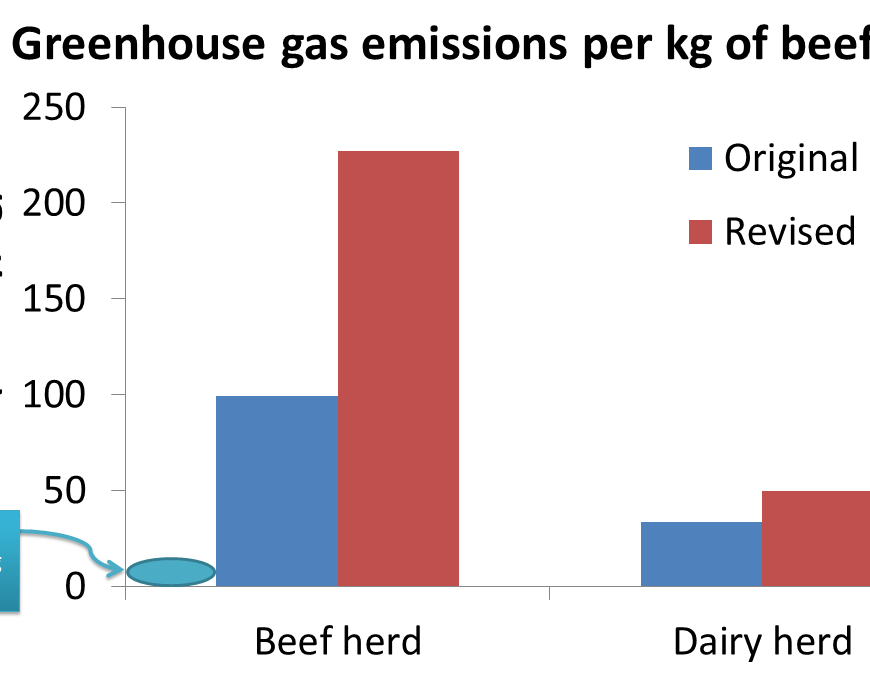
A chart shows revised carbon footprints for beef. Beef from a beef herd now has an estimated carbon footprint of 227 kg CO2eq / kg (up from 100). Beef from a dairy herd has a revised carbon footprint of 50 kg CO2eq / kg (up from 24). The chart also shows that "almost everything else" has a carbon footprint in the single digits or low double digits.

A mammoth adjustment to beef’s carbon footprint

This post examines a correction to a seminal paper by Oxford University scientists Poore and Nemecek on the environmental footprints of food. It shows that, of all the products we make, including the massive amounts of cement and steel used for construction, beef is categorically responsible for the most GHGs, by a very wide margin. Continue reading A mammoth adjustment to beef’s carbon footprint

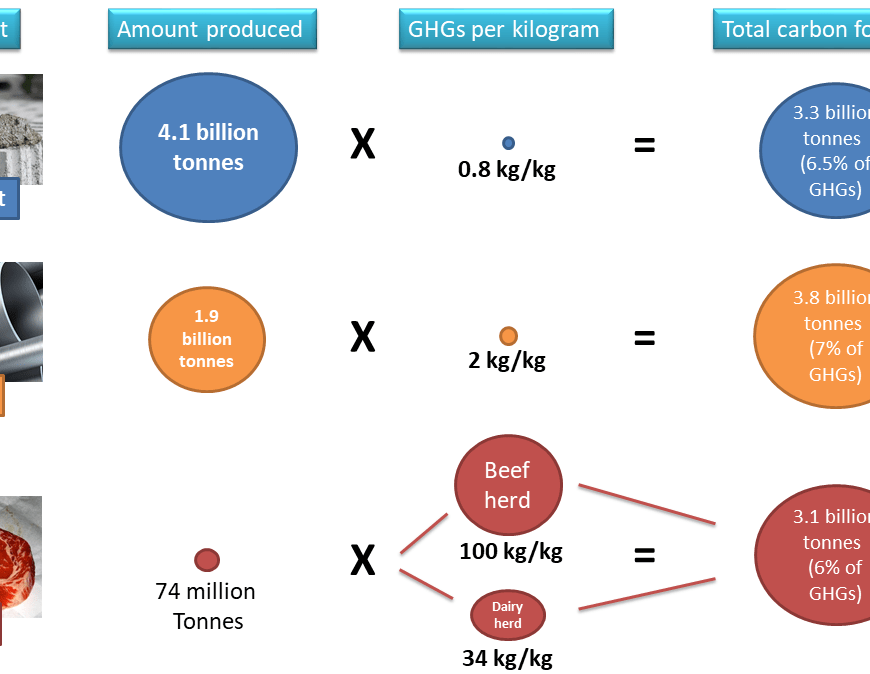
The image shows three products - cement, steel, and beef. Next to images of these products is data showing the amount produced globally (4.1 billion tonnes, 1.9 billion tonnes, and 74 million tonnes, respectively) and then greenhouse gases per kilogram (0.8, 2, and 100 kg CO2/kg product, respectively). The final column shows the total carbon footprints for these three industries, representing around 6.5%, 7%, and 6% of global GHGs, respectively.

Perspective on the carbon footprints of steel, cement, and beef

Globally, we produce way less beef compared to steel and cement and yet the beef industry’s total carbon footprint is as large* as that of the other two industries. This is because the carbon footprint of beef, per kg of product, eclipses virtually everything else on the planet. The “carbon footprint multiplier” for beef is 100 while for cement and steel it’s around 0.8 and 2, respectively. While plans are in progress to decarbonize cement and steel, we need to put beef in perspective.

*It’s actually a lot larger if we factor in carbon sequestration on land formerly used for beef.
Continue reading Perspective on the carbon footprints of steel, cement, and beef

The cover of Bill Gates’s 2021 book, How to Avoid a Climate Disaster is shown. The book's subtitle is The solutions we have and the breakthroughs we need.

What Bill Gates missed in How to Avoid a Climate Disaster

I’m taking a look at Bill Gates’s 2021 book, How to Avoid a Climate Disaster. His book is full of useful information and hopefully has inspired changes in policy. Unfortunately, last week, Bill did the opposite of his own advice. My main issue with the book is that it downplays actions that we can take as individuals and consumers. Continue reading What Bill Gates missed in How to Avoid a Climate Disaster