

Third-party certifications are especially important in this age of corporate power and political weakness. The current US administration, despite viewing itself as strong, is extremely weak where it really matters – protection of our home, planet Earth, from threats such as corporate exploitation. Certifications enable consumers to quickly check if a product meets social and/or environmental standards that we would like to uphold. For my part, I like the idea of keeping our rainforests intact, so I’m motivated to figure out whether Rainforest Alliance is effective and therefore worth supporting.
In my recent evaluation of Fairtrade International, I came to the conclusion that fair trade is worth supporting, not only for the social benefits but also for environmental benefits. Fairtrade certification entails quite a bit of environmental oversight and often acts as a bridge towards organic certification. So, when we have fair trade and organic, why do we need Rainforest Alliance? You could say that it’s all about shade.

The importance of shade cover
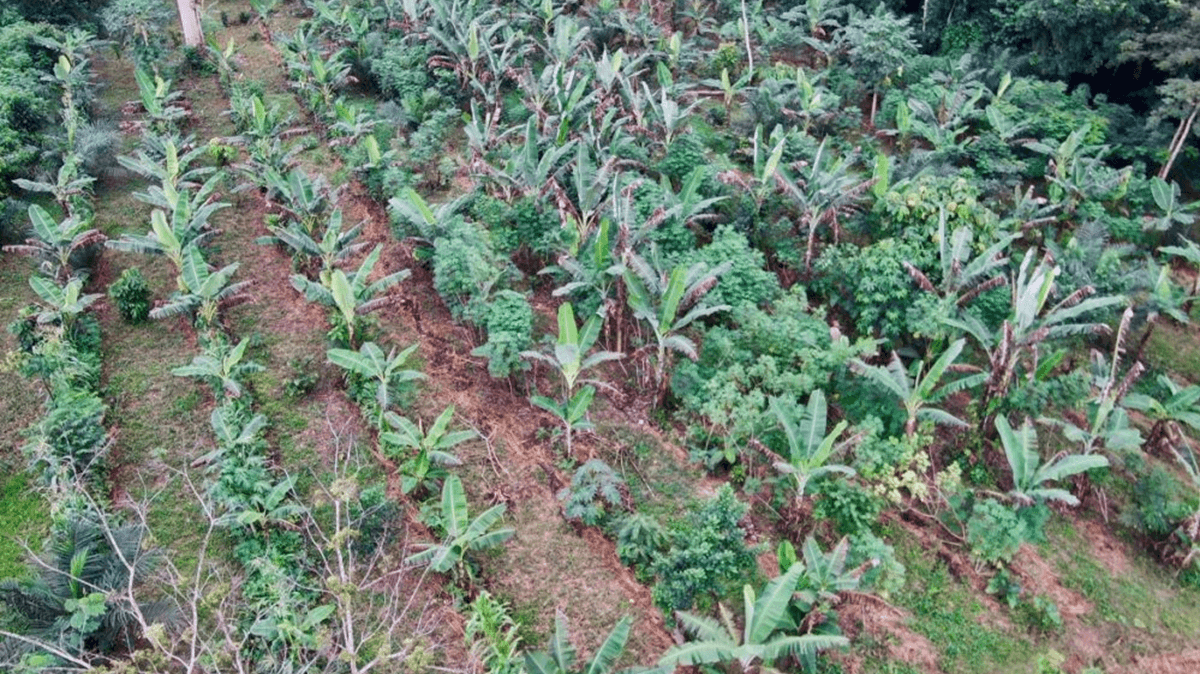
The level of shade cover is one of the best ways to determine if forest habitats are being maintained. Many tropical crops such as coffee and cacao can be grown either as a monoculture in full sun or under a partial canopy of taller native trees that provide shade. These native trees help maintain native wildlife but can also bring several benefits to crops – enriching soil and also protecting against disease and climate extremes.
I’ve touched on this topic before, so I’ll refer you to posts on agroforestry, shade-grown coffee, and chocolate and deforestation for more detail. You may be surprised to learn that shade-tolerant crops such as cacao can tolerate over 30% shade cover with no reduction in crop yield.
Our results suggest that cocoa agroforests up to 30% cover are far superior to monocultures because they do not strongly compromise production, while at the same time they provide benefits for disease management, climate mitigation and adaptation and biodiversity conservation – Nature Sustainability, 2018
Given the importance of tropical forests to addressing planetary boundaries such as climate change, it’s very welcome news that maintaining native trees can be advantageous to farmers. And yet, most mainstream coffee and chocolate is grown as full-sun monocultures on land that was originally rainforest.
So, given the importance of supporting shade-grown products, does a Rainforest Alliance certification guarantee a certain level of shade cover?
Current Rainforest Alliance standards
UTZ and Rainforest Alliance merged under the Rainforest Alliance label and now operate jointly under standards that were set in 2020 and introduced as follows:
To obtain certification, farms must meet the Sustainable Agriculture Standard, which is designed to conserve ecosystems, protect biodiversity and waterways, conserve forests, reduce agrochemical use, improve livelihoods, and safeguard the rights and well-being of workers and local communities.
In March 2025, the Rainforest Alliance published an update to these standards (V1.4, effective Oct 2025). Sadly, Environment, is one of the smallest sections in this 78 page document, which only mentions shade a handful of times. Here is Rainforest Alliance’s current policy on shade:
If there is less than 10% of the total area under natural vegetation cover or less than 15% for farms growing shade-tolerant crops, management sets targets and takes actions for farms to reach these thresholds.
This is disappointing. Not only have Rainforest Alliance set a low threshold for shade cover but it’s not even a requirement for certification. Rainforest Alliance is a process-oriented certification, meaning that, for many of the standards, the certified farm just has to work towards meeting them. This is in contrast to many other certification programs – fair trade, organic, and Smithsonian Bird Friendly – that all require compliance to standards to qualify for certification.
The threshold for shade cover recommended by the Rainforest Alliance has become weaker over time. Back in 2017, researching shade-grown coffee, I was heartened to see that Rainforest Alliance had set a target of 40% shade cover and at least 12 native species per hectare. As explained by Coffee Habitat, the Rainforest Alliance standards slipped in 2017 and then again after merging with Utz in 2020.
On the flipside, you could argue that a process-oriented certification can do some good by allowing farmers to join and then make improvements along the way. And there are some absolute requirements to certification, for example that agricultural land must not have been deforested since 2014 and must not be in a protected zone.
From January 1st, 2014, onward, natural forests and other natural ecosystems have not been converted into agricultural production or other land uses. Production or processing does not occur in protected areas or their officially designated buffer zones, except where it complies with applicable law.
Producers must report geolocation coordinates and a map of the land farmed to comply with this. There are various other base requirements such as:
- The use of only approved agrochemicals
- Workers have a right to unionize
- Wages must increase with inflation
- A statement and committee on gender equality
- Children living onsite must attend some form of school
- No genetically-modified crops
- No fire allowed for field clearing
- No burning of waste
- No hunting/collection of threatened animals/plants
Many of the Rainforest Alliance requirements are really just ways of saying that farmers/producers must comply with laws on labor, human rights, land use and the environment (which they should be doing anyway). It looks like Rainforest Alliance’s standards have become broader, perhaps competing with other certifications, such as fair trade. For example, Rainforest Alliance now requires the payment of a premium on top of the market price. However, the premium rate is not mandated (except for cocoa) and, importantly, there’s no guaranteed price minimum, as there is for fair trade.
One can argue that broadly encompassing many issues could make Rainforest Alliance more effective. Provisions on social issues like gender equality and education, for example, should ultimately protect rainforests too. On the other hand, the rules on protection of rainforests – the original goal of the organization – have become weaker.
The Rainforest Alliance did issue a statement on introducing more rigorous certifications.
In the coming years, we will offer farmers and companies the possibility of adopting new specialized certification solutions focusing on regenerative agriculture, climate, or livelihoods.
This reminds me a bit of the palm oil certifier, RSPO, whose attempt to introduce a more rigorous standard was basically an admission that current standards are not good enough. That higher RSPO standard didn’t take off in the end, perhaps indicating that most market buyers just want a logo to put on a package, however inadequate the certification.
My feeling is that the Rainforest Alliance is in danger of going the same way as the RSPO unless it sets more rigorous targets on protection of rainforests. Let’s take a look at studies on the effectiveness of Rainforest Alliance in real life.

Studies on the effectiveness of Rainforest Alliance
Similar to the post on fair trade, I’m going to evaluate Rainforest Alliance by focusing on peer-reviewed publications. Scientific studies that have been reviewed by other scientists for rigor of methods and statistics are the gold standard for this kind of assessment.
Looking at the standards of Rainforest Alliance and Utz before their merge, Prof. Laura Raynolds (an expert on fair trade) concluded that they were weak and should do more:
Fair Trade has the strongest social justice standards, while Organic and Bird Friendly certifications have the strongest ecological standards. These three certifications establish standards that raise the bar, requiring sustainability conditions well above generally accepted norms. In contrast, initiatives like Utz Kapeh and Rainforest Alliance use standards largely to hold the bar and guarantee minimum requirements in the mainstream coffee industry.
Fast forwarding to a 2025 paper on Rainforest Alliance certified cocoa farms in Indonesia, the investigators found no difference between certified and non-certified farms in terms of shade cover. Here’s what they said about bird species diversity:
Bird species richness was significantly higher in certified plantations (p = 0.03), but the observed effect on bird species richness became statistically insignificant after controlling for elevation and plantation age
At least there seems to be an upside here that certified farms are older, on average, rather than built on freshly deforested land. The authors also concluded that:
Current Rainforest Alliance shade criteria are low, and potentially not sufficiently enforced, limiting Rainforest Alliance’s potential to enhance biodiversity habitat. Certification might provide socioeconomic benefits to farmers while we found environmental outcomes of certification to be limited.
A 2013 study on tea in Kenya concluded that “Rainforest Alliance Certification of Kenyan tea farms is demonstrated to be having a positive impact on a range of environmental and social aspects of certified farms, although with large scope for improvement.”
These benefits include improved work conditions and to a limited extent, natural resource conservation.
A 2016 paper on coffee in India concluded that most coffee farms already had better conditions (both social and environmental) than the Rainforest Alliance standards required. Take a look at the following statement, considering that the Rainforest Alliance requirement for shade cover has been weakened since then:
Right now maintaining 40 % shade cover and 12 species per hectare is not a big issue. If RA guidelines required farmers to maintain 60 % or plant more junglewood species; then, it would definitely impact our certification
A study on bananas in Costa Rica, published in 2016, measured biodiversity on farms that were certified organic, certified by Rainforest Alliance or uncertified. They concluded that biodiversity was lower on Rainforest Alliance farms, compared to organic farms and even compared to uncertified farms in the case of insect diversity.
The results showed that RA certified farms had less insect diversity compared to non-RA certified farms and that both farm types had less insect diversity than organic farms. There was little difference between RA and non-RA certified farms with regards bird community composition. Thus, organic farming conserves biodiversity, while alternative environmental labels (e.g. a Rainforest alliance seal) may not have any visible positive effect on in-farm biodiversity.
A 2022 paper on small scale coffee producers in Rwanda reported an 11 percentage point increase in the likelihood of shade trees on certified farms compared to non-certified farms, concluding:
We find no significant association between certification and socio-economic indicators but a significant correlation between certification and good agricultural practices and biodiversity-related practices.
A 2016 paper titled Rainforest Alliance Failing Plantation Workers discussed a tendency of some supermarkets to opt for Rainforest Alliance as a certification (for bananas) instead of Fairtrade.
With the recent announcements by Aldi and Lidl that all fruit, not already labelled Fairtrade, approximately 85 percent, will be certified by the Rainforest Alliance (RA), comes the implied claim that cheap fruit can also deliver sustainability. However, the rapid expansion of RA certification has invited a growing suspicion that much of its success can be attributed to the laxity of the standards themselves and the undemanding nature of the RA certification process.

This pattern of supermarkets such as Aldi and Lidl backing away from Fairtrade bananas in favor of Rainforest Alliance was repeated in 2019. A coalition of South American banana growers protested in 2020 that Aldi’s price cuts have made it very difficult for them to make a living, cutting smallholder farmers’ income by as much as 50%. Also, efforts on the sustainability front are rarely maintained (understandably) when farmers are on the poverty line.
That example highlights a weakness of the Rainforest Alliance – it’s trying to compete with fair trade by including more guidelines on social impact, but it lacks a key feature of fair trade: a price minimum. It’s widely agreed that Rainforest Alliance (RA) is not as effective when it comes to social impact as a good fair trade certification such as Fairtrade International.
Research from Rainforest Alliance
To highlight a positive aspect of the Rainforest Alliance, members of the nonprofit have contributed to research and publications on important topics. For example, a 2020 paper published in the Lancet Planetary Health addressed a risk/reward of various pesticides, devising “a system to classify pesticide risks and hazards with respect to human and environmental health and produce a minimum pesticide list.”
This work was a useful contribution to the field of sustainable agriculture and also stood up to agrochemical giants such as Bayer and Syngenta. Out of 659 pesticides assessed, 133 were classified as HHPs – highly hazardous pesticides – including the bestselling insecticides commonly known as neonics. By excluding these HHPs they agreed on a set of safer, efficacious pesticides to cover the full range of applications.
If the organization could do more of this kind of work while also increasing the stringency of environmental regulations, then I think it would be worthy of support, as it once was.
Bottom line: should you support Rainforest Alliance?
The sampling of case studies that I’ve summarized above is representative of the literature on the efficacy of Rainforest Alliance (but let me know if I missed anything big). There’s a fairly strong consensus opinion that Rainforest Alliance doesn’t greatly improve social or environmental outcomes and that standards need to be more stringent to be effective.
Rainforest Alliance certification is weak where you would expect it to be strong – the protection of rainforest habitats – probably because it’s trying to do a bit of everything. Requirements for shade cover became so weak that in some cases, like the above example of coffee farming in India, RA’s bar is lower than existing norms. This is a real shame because the RA had a useful function/niche that complemented organic and fair trade certifications. Over the years, in an attempt to become a jack of all trades, Rainforest Alliance seems to have ended up as master of none.
Fair trade certification does a better job on the social side and perhaps even on the environmental side too, often serving as a bridge to organic certification. Organic certification is more rigorous than Rainforest Alliance on environmental fronts, especially now that RA has backtracked on shade requirements.
There are also programs that require organic certification as a baseline and then add other requirements on top. Smithsonian Bird Friendly is one of the best certifications to look out for as it requires organic certification with additional rigorous standards for shade cover.
So if we acknowledge that Rainforest Alliance is not the best certification, let’s ask this question:
Is Rainforest Alliance better than nothing?
If you see the Rainforest Alliance green frog logo on packaging, is this better than nothing at all? That’s actually debatable.
On one hand, most studies point towards Rainforest Alliance leading to a slight improvement in social/environmental conditions, or at least no worsening (except in a few cases such as insect diversity on banana plantations in Costa Rica). In other words, it’s not great but it’s better than nothing.
On the other hand, by endorsing Rainforest Alliance instead of more rigorous certifications, we are allowing food manufacturers and supermarkets to get away with the bare minimum. In other words, it’s a trend we shouldn’t support.
Putting that together, my decision will be to choose products with the Rainforest Alliance logo only in a pinch. For example, if I’m facing a choice between products sporting the RA green frog logo and others with sketchy in-house logos (e.g., Cocoa Life on Mondelez products). But normally, I’ll prioritize supporting more rigorous certifications such as Fairtrade International, organic, regenerative organic, or bird friendly.
I hope for future improvements from Rainforest Alliance such as a change in policy on shade or a launch of the more rigorous regenerative agriculture standard. In response, I would happily change my position on supporting the RA.
In the meantime, we can let Rainforest Alliance and participating food companies know that we want to see higher standards, especially on shade cover. This can be done via product reviews – a goal of the Green Stars Project is to effect change by communicating publicly (via Green Stars reviews) on shortcomings such as lax standards.
Discover more from The Green Stars Project
Subscribe to get the latest posts sent to your email.


Thanks for the evaluation of the Rainforest Alliance certification. I wasn’t familiar with this certification. Perhaps it started with good intentions, but didn’t have the means of enforcing the standards required.
LikeLiked by 1 person
Hey Rosaliene – thanks for your comment!
Yes I think the RA definitely did start with good intentions but they have been diluted by influence from industry groups. Even with correct enforcement of the standards they’re just not high enough at the moment, unfortunately.
LikeLiked by 1 person
The industry groups always find a way to infiltrate and corrupt our best intentions.
LikeLiked by 1 person
Tremendous work/info as always. Thanks for all you do for us/the planet.
LikeLiked by 1 person
Thank you! Much appreciated 🙂
LikeLike
Thanks for the research. Another example of greenwashing…
LikeLiked by 1 person
I don’t think they set out with that intention – they’ve just lost their way a bit.
Hope they can make a comeback 🙂
LikeLike
Thank you for this interesting post! I read it with great interest.
Thank you also for integrating our results from Indonesia. There is another study forthcoming which is more focusing on where RA is implemented. It also shows that it is mostly benefiting cacao farmer who are easy to reach, hence not all.
LikeLiked by 1 person
Thanks for your comment, Saskia!
It’s so nice to hear from one of the study authors. Glad you found it interesting.
Feel free to share a link to your latest paper, once it comes out. Cheers!
LikeLike