

How do we live on a budget while also being as socially and environmentally responsible as possible? To live on a tight budget is challenging on its own, and is probably about to get more challenging. However, the good news is that there is significant overlap between living on a budget and living an *ethical life – they are actually pretty compatible goals.
*The term ethical life sounds very broad, I know. I mean a life that entails causing as little harm as possible (as humans and as consumers) to our planet and society.
You’ll sometimes hear the opinion that an ethical lifestyle is only attainable by the wealthy. I understand why some people have this opinion – it comes from seeing too many high-priced ethical items in bougie stores. It is true that in some cases the “ethical version” of an item costs more: organic veggies, shade-grown coffee, etc. But there are many other situations where the responsible path costs a lot less, putting your budget back in the black. I’ll get into them below.
Scientific data backs up the idea that living on a budget is conducive to being socially and environmentally responsible. For example, see the chart below on the breakdown of our per capita carbon footprint by income level. People living on lower income (or a stricter budget) tend to have significantly smaller carbon footprints.

Chart from the 2022 World Inequality Report showing individual carbon footprints for a few regions, broken down by income level. For more on this topic, see your most important resolution: 7 tonnes CO2.
So here are my top tips for living an ethical lifestyle on a budget!
Eat mainly plants
Rather than argue the value of a plant-based diet point in this post, I’m going to do a special post on that topic, next week. I will just say that science repeatedly leads us to the conclusion that cutting red meat from our diet is the top action that we can take to be more environmentally and socially responsible. The point I want to focus on here is that following a mainly plant-based diet can be very budget-friendly.
Here are some suggestions for an affordable, sustainable plant-based diet:
- Take a tip from a billion people in India and get used to cooking with dried pulses. It’s estimated that at least one third of the population in India follows a vegetarian diet and around 10% is vegan. Try making a couple of different versions of dahl and find one that you like. There are so many options for dishes made from pulses from India and beyond. Good options for beginners include lentil soup and mujadara, a comforting Middle Eastern dish of lentils and rice topped with crispy onions.
- Find dishes that make tofu enjoyable for you. One of my favorite dishes is a Japanese hotpot (nabe) containing Napa cabbage, veggies, shitake mushrooms, and silken tofu.
- Snack on edamame. Frozen soybeans are cheap and can be used as the basis of a complete meal on occasion – all it needs is a beer on the side!
- Whole grains such as oats are cheap and highly nutritious.
- Cheap veggie lunches like beans on toast are affordable and nutritious. The same goes for the many other combinations of legume & carb: burritos, chili and potatoes, hummus and pita, chickpea curry, lentil salad, etc.
Many of the items above, like dried pulses, beans, oats, etc., can be found at affordable prices in bulk sections. They also have long shelf lives and are therefore much less likely to lead to food waste, compared to meat.
Try the Grocery Outlet
Personally, I find that including some meat and dairy substitutes makes it easier to follow a plant-based diet – vegan sausages and burgers, “chicken” pieces for stir-fries, plant-based milk and butter, etc. Some of these products can be pricey (particularly in the US) so that brings me to the next suggestion – try shopping at the Grocery Outlet. You can find great deals on meat and dairy substitutes – products from Beyond Meat, Quorn, Gardein, and Miyoko’s, to name a few brands.
The store’s business model helps combat food waste while at the same time providing access to ethical items like vegan food at affordable prices. See my post on the social and environmental impact of the Grocery Outlet (which I scored 4/5 Green Stars).
It started off in San Francisco when, back in 1946, James Read sold food at a discount that he had purchased from government surplus supplies. The idea is still the same – the Grocery Outlet is able to sell food at a discount for various reasons – it might be surplus stock, a product with old packaging, a new product that’s being tried out, or in some cases products that are slightly damaged or close to their expiration date. – Ethical review of the Grocery Outlet
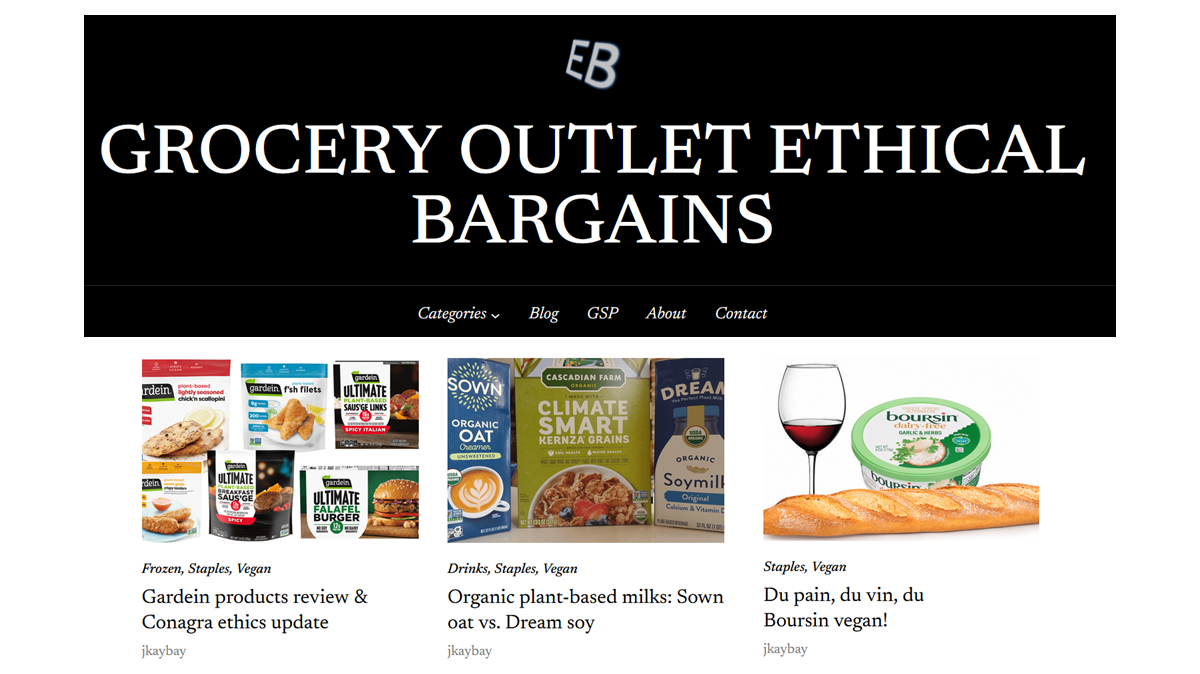
Post-Covid, I started the blog, Ethical Bargains, which features items I’ve bought on discount at the Grocery Outlet (like the GSP, it’s not affiliated with the brands I review, or the supermarket for that matter). The idea is to encourage people to try out vegan items, whatever their budget. Posts on Ethical Bargains also serve as Green Stars Project case studies, with the aim of encouraging y’all to include Green Stars ratings when you write reviews.
Too Good To Go
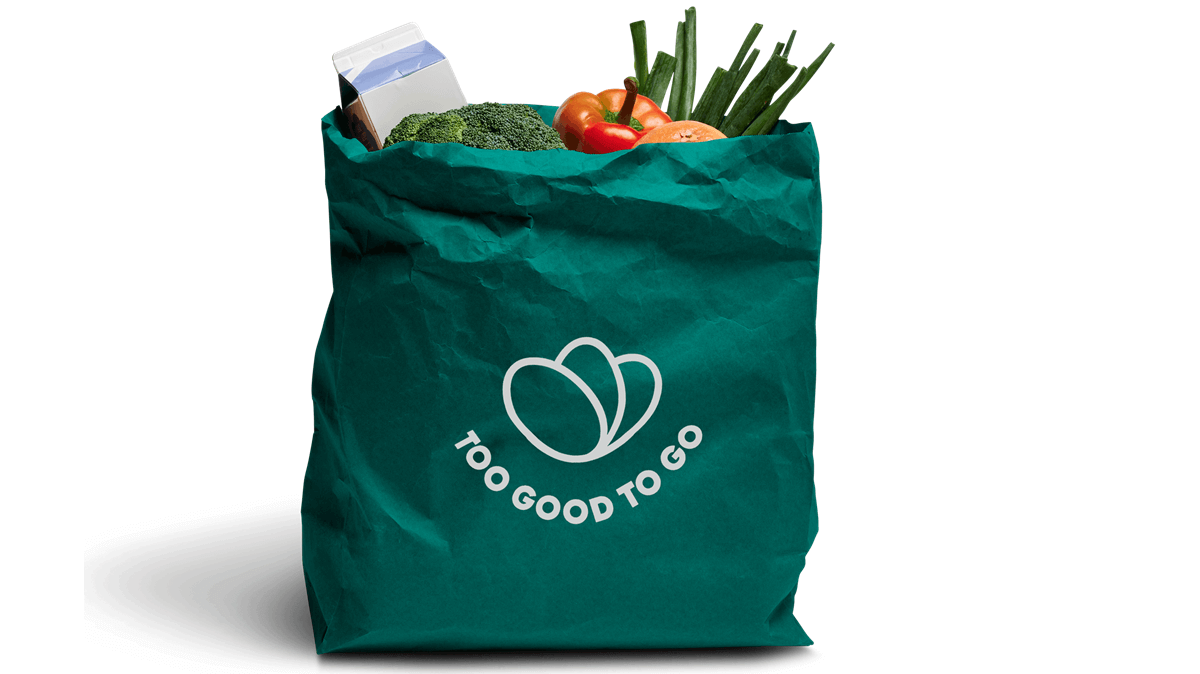
Too Good To Go is also built on a business model that addresses food waste. Briefly, it allows you to buy heavily discounted food from local cafes, bakeries, restaurants and stores that would have otherwise been wasted. You will get a mystery bag of items (e.g., various breads and pastries) usually at one third of the normal retail price. It’s available in 19 countries including the US, Canada, Australia, and much of Europe.
I’ve paid $7 for a $21 mystery bag from the Whole Foods bakery more than once to find that it contains closer to $40 worth of food. I learned that Whole Foods actually makes really good vegan croissants, so that was a useful discovery 🙂 I’ve covered Too Good To Go in a previous post here on the GSP, so I’ll refer you to that for more detail.
The combination of food loss and food waste has an estimated carbon footprint of 4.4 billion tonnes of CO2 – around 7.5% of global greenhouse gas (GHG) emissions. – Too Good To Go, an app to reduce food waste
Other food waste apps that are worth looking into include Flashfood (Canada and the US) and Foodhero (Canada).
Buy food from the clearance section
The old-school alternative to food waste apps is to check the clearance section in your local food stores. In the EU I’ve come to rely on great “last chance” deals on food items like vegan sausages that are close to their expiration date. In the US, independent grocery stores are more likely to have a section for discounted food than the big chains – another reason to support these stores.
Thrift stores
While researching a chapter on textiles for my upcoming book (I’m currently seeking a publisher) I dedicated some time to thrift stores. Here are a few quotes from that chapter:
So the most obvious place to start before needing to do any research on ethical clothing is to really make the effort to wear everything you already own. The second most important habit is to buy second-hand clothing when possible.
Take a quick look at the various impacts of textiles and consider that you are mitigating all of them – carbon, water, land, pollution, social, and waste – when you buy pre-owned items. Even microplastics released into water supplies during laundry are diminished because synthetic fabrics release most of their microplastic fibers during the first few washes (i.e., by their first owner).
Money spent usually goes towards a good cause – from animal shelters to support systems for people with disabilities. People who volunteer their time at thrift stores benefit from the satisfaction of contributing to something meaningful. Thrift stores can also help communities adapt to fluctuating economic conditions, such as the 2008 financial crisis.
…Or the financial crisis that we currently face.
Buy used, online
One of the best habits to develop is searching for the used version of whatever you need rather than defaulting to Amazon. If you feel the need for retail therapy (people have shopped for millennia, after all) you can still get your kicks on auction sites such as Goodwill or Ebay. You can filter your search on Ebay to show only items from charities, making it a double win.
Buy nothing
There are so many ways to avoid purchases, from simply fixing stuff or supporting your local library to movements that help you find free stuff in your neighborhood, such as Buy Nothing.
You’re actually more likely to have an ethical lifestyle when you’re on a budget, so cheers to you if you are! Please share your ideas below.
Discover more from The Green Stars Project
Subscribe to get the latest posts sent to your email.

James, thanks for this informative and interesting post, as always. I buy my beans and lentils at our local Indian shop. I’ve seen the black lentils but never tried them. Now I know how to prepare it, using the mujadara recipe that you’ve shared 🙂
LikeLiked by 1 person
Thank you kindly, Rosaliene!
That’s true – Indian shops are a great source of affordable legumes! Are you a fan of the Indian snack mixes too?
LikeLiked by 1 person
Since I cut wheat flour pastries from my diet, I replaced them with Indian chickpea snacks. I’ve also tried some of their sweet treats.
LikeLiked by 1 person
I hope Too Good to Go will continue to expand in areas outside big cities. I’m always checking the app but 80% of the choices in my region are donut shops and 7-11 stores.
LikeLiked by 1 person