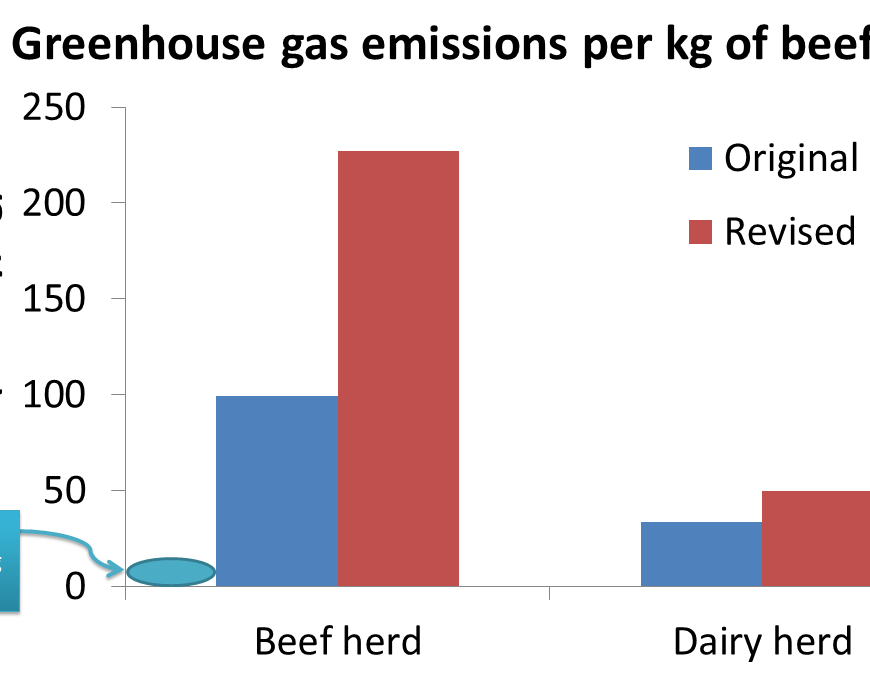
A chart shows revised carbon footprints for beef. Beef from a beef herd now has an estimated carbon footprint of 227 kg CO2eq / kg (up from 100). Beef from a dairy herd has a revised carbon footprint of 50 kg CO2eq / kg (up from 24). The chart also shows that "almost everything else" has a carbon footprint in the single digits or low double digits.

A mammoth adjustment to beef’s carbon footprint

This post examines a correction to a seminal paper by Oxford University scientists Poore and Nemecek on the environmental footprints of food. It shows that, of all the products we make, including the massive amounts of cement and steel used for construction, beef is categorically responsible for the most GHGs, by a very wide margin. Continue reading A mammoth adjustment to beef’s carbon footprint

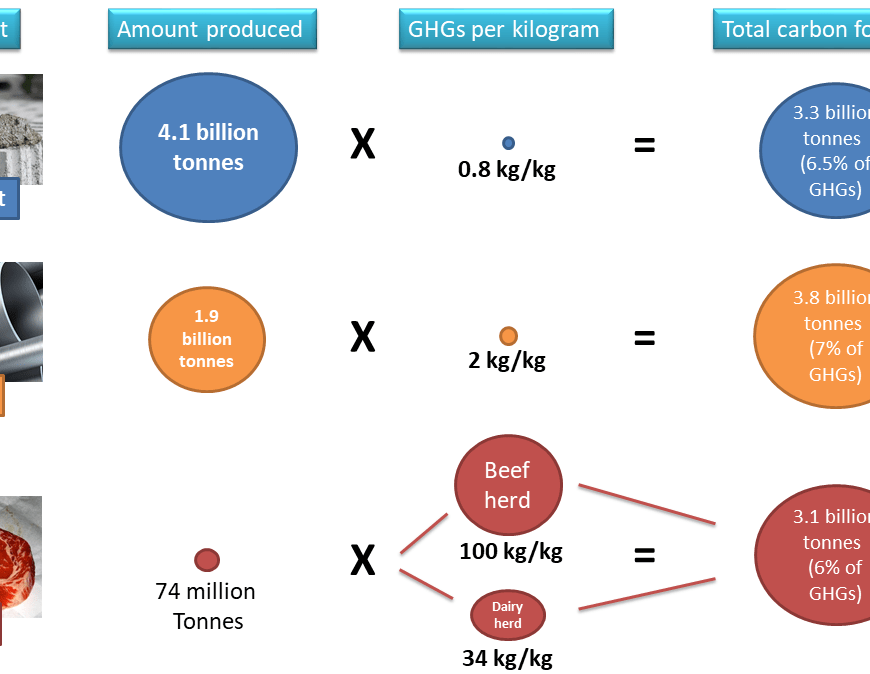
The image shows three products - cement, steel, and beef. Next to images of these products is data showing the amount produced globally (4.1 billion tonnes, 1.9 billion tonnes, and 74 million tonnes, respectively) and then greenhouse gases per kilogram (0.8, 2, and 100 kg CO2/kg product, respectively). The final column shows the total carbon footprints for these three industries, representing around 6.5%, 7%, and 6% of global GHGs, respectively.

Perspective on the carbon footprints of steel, cement, and beef

Globally, we produce way less beef compared to steel and cement and yet the beef industry’s total carbon footprint is as large* as that of the other two industries. This is because the carbon footprint of beef, per kg of product, eclipses virtually everything else on the planet. The “carbon footprint multiplier” for beef is 100 while for cement and steel it’s around 0.8 and 2, respectively. While plans are in progress to decarbonize cement and steel, we need to put beef in perspective.

*It’s actually a lot larger if we factor in carbon sequestration on land formerly used for beef.
Continue reading Perspective on the carbon footprints of steel, cement, and beef

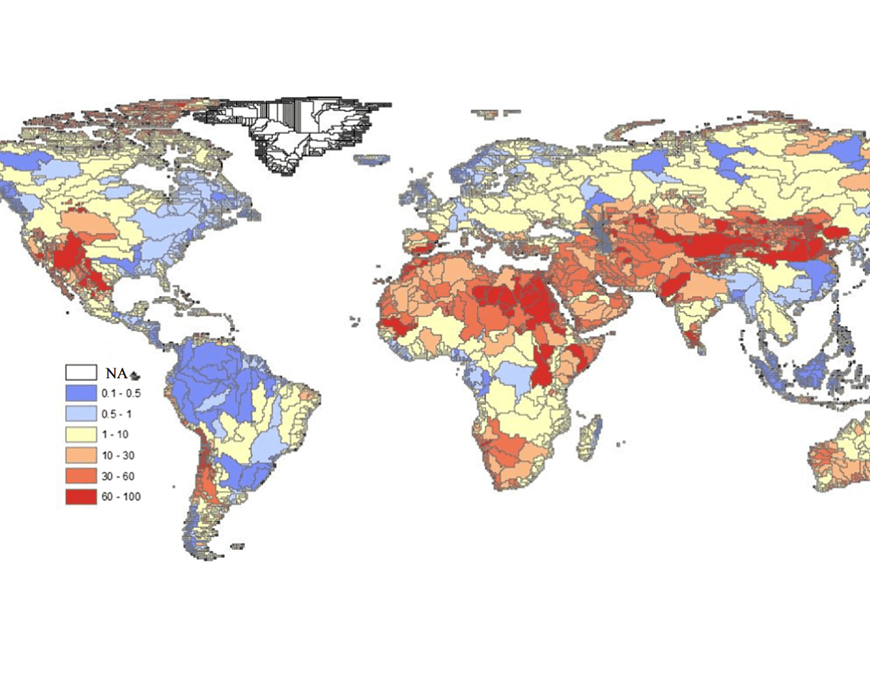
A world map published by the AWARE model (2018) ranks water scarcity on a scale of 0.1 to 100. Regions are colored various shades of blue, cream, and red depending on the level of water scarcity.

The best way to reduce your water footprint

When it comes to water usage, there are several different angles to consider: blue water, green water, and water scarcity, for example. There are also significant differences in the reported water footprints of various consumer goods. There is, however, fairly universal agreement on the best way to reduce our water footprint. Continue reading The best way to reduce your water footprint