
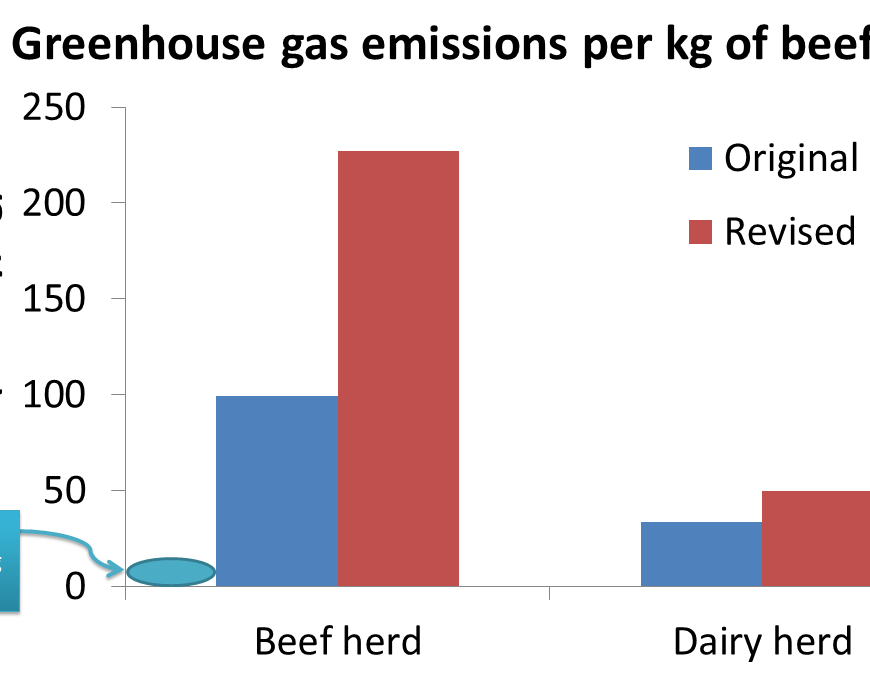
A chart shows revised carbon footprints for beef. Beef from a beef herd now has an estimated carbon footprint of 227 kg CO2eq / kg (up from 100). Beef from a dairy herd has a revised carbon footprint of 50 kg CO2eq / kg (up from 24). The chart also shows that "almost everything else" has a carbon footprint in the single digits or low double digits.

A mammoth adjustment to beef’s carbon footprint

This post examines a correction to a seminal paper by Oxford University scientists Poore and Nemecek on the environmental footprints of food. It shows that, of all the products we make, including the massive amounts of cement and steel used for construction, beef is categorically responsible for the most GHGs, by a very wide margin. Continue reading A mammoth adjustment to beef’s carbon footprint

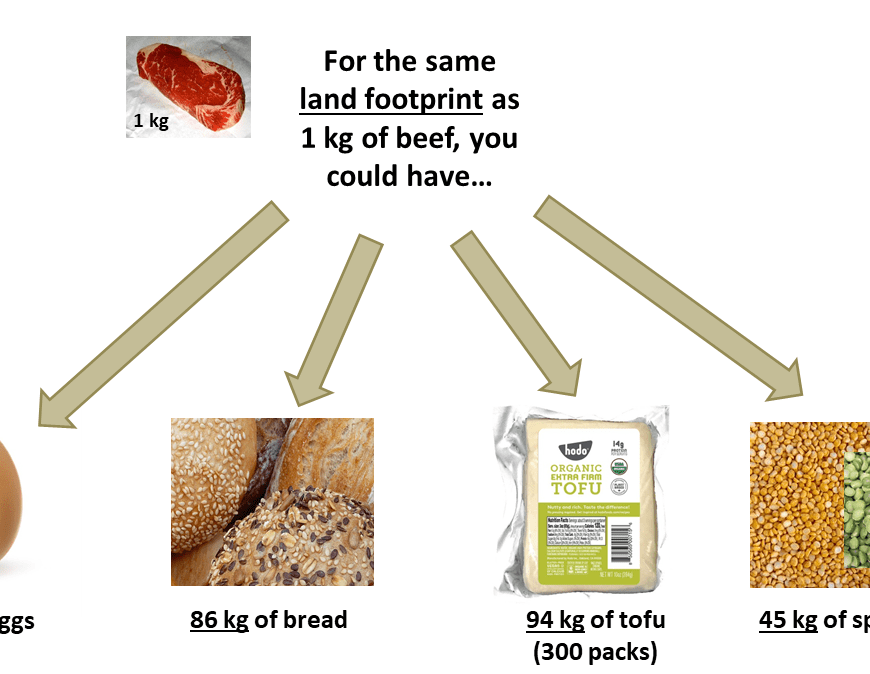
Comparing the land footprint of 1 kg beef to eggs, bread, tofu, and split peas. For 1 kg of beef, you could have 52 kg of eggs (1000 eggs), 86 kg of bread, 94 kg of tofu, or 45 kg of split peas for the same land footprint.

The environmental footprints of meat and other foods

As you probably know by now, the kind of food we choose to eat has a major impact on climate change, deforestation, pollution, biodiversity losses, water use, and food security. But the extent to which our various food options impact these environmental and social issues has, surprisingly, not been well-covered by the media. These details are obviously important for people who want to reduce their impact on the planet, but can’t immediately switch to a vegan diet (which includes most people). Continue reading The environmental footprints of meat and other foods