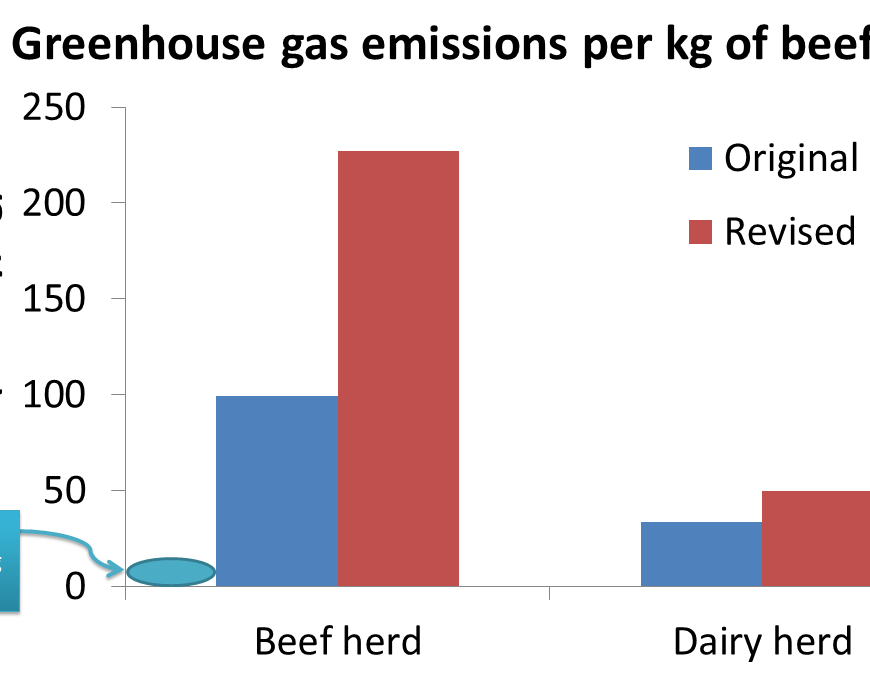
A chart shows revised carbon footprints for beef. Beef from a beef herd now has an estimated carbon footprint of 227 kg CO2eq / kg (up from 100). Beef from a dairy herd has a revised carbon footprint of 50 kg CO2eq / kg (up from 24). The chart also shows that "almost everything else" has a carbon footprint in the single digits or low double digits.

A mammoth adjustment to beef’s carbon footprint

This post examines a correction to a seminal paper by Oxford University scientists Poore and Nemecek on the environmental footprints of food. It shows that, of all the products we make, including the massive amounts of cement and steel used for construction, beef is categorically responsible for the most GHGs, by a very wide margin. Continue reading A mammoth adjustment to beef’s carbon footprint

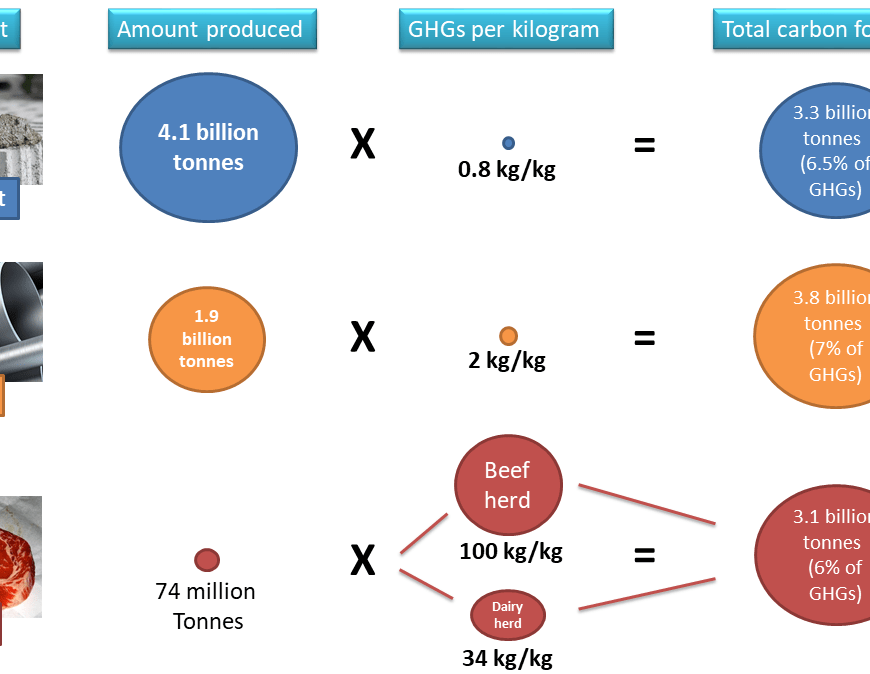
The image shows three products - cement, steel, and beef. Next to images of these products is data showing the amount produced globally (4.1 billion tonnes, 1.9 billion tonnes, and 74 million tonnes, respectively) and then greenhouse gases per kilogram (0.8, 2, and 100 kg CO2/kg product, respectively). The final column shows the total carbon footprints for these three industries, representing around 6.5%, 7%, and 6% of global GHGs, respectively.

Perspective on the carbon footprints of steel, cement, and beef

Globally, we produce way less beef compared to steel and cement and yet the beef industry’s total carbon footprint is as large* as that of the other two industries. This is because the carbon footprint of beef, per kg of product, eclipses virtually everything else on the planet. The “carbon footprint multiplier” for beef is 100 while for cement and steel it’s around 0.8 and 2, respectively. While plans are in progress to decarbonize cement and steel, we need to put beef in perspective.

*It’s actually a lot larger if we factor in carbon sequestration on land formerly used for beef.
Continue reading Perspective on the carbon footprints of steel, cement, and beef

The cover of Bill Gates’s 2021 book, How to Avoid a Climate Disaster is shown. The book's subtitle is The solutions we have and the breakthroughs we need.

What Bill Gates missed in How to Avoid a Climate Disaster

I’m taking a look at Bill Gates’s 2021 book, How to Avoid a Climate Disaster. His book is full of useful information and hopefully has inspired changes in policy. Unfortunately, last week, Bill did the opposite of his own advice. My main issue with the book is that it downplays actions that we can take as individuals and consumers. Continue reading What Bill Gates missed in How to Avoid a Climate Disaster

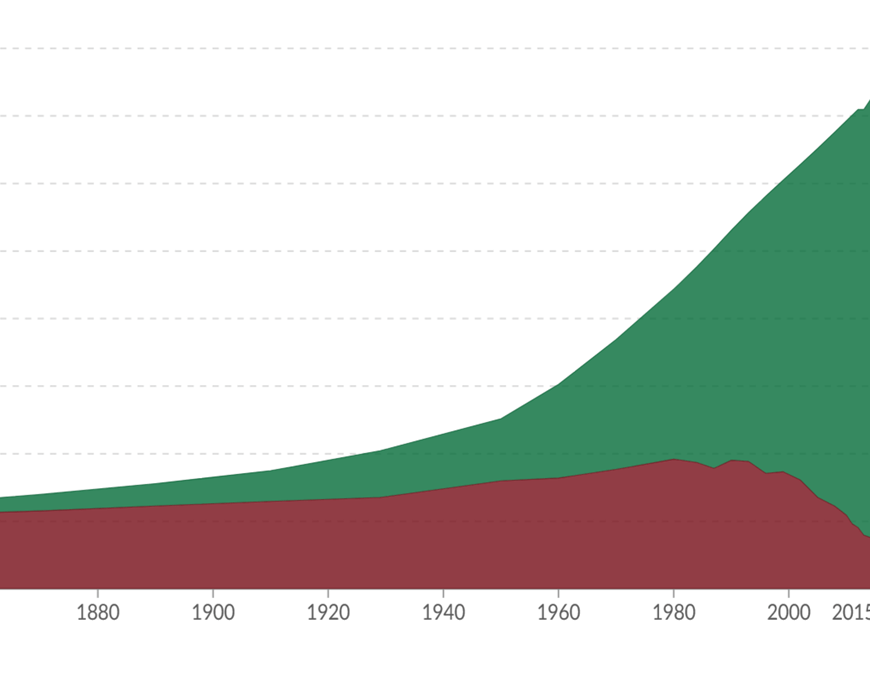
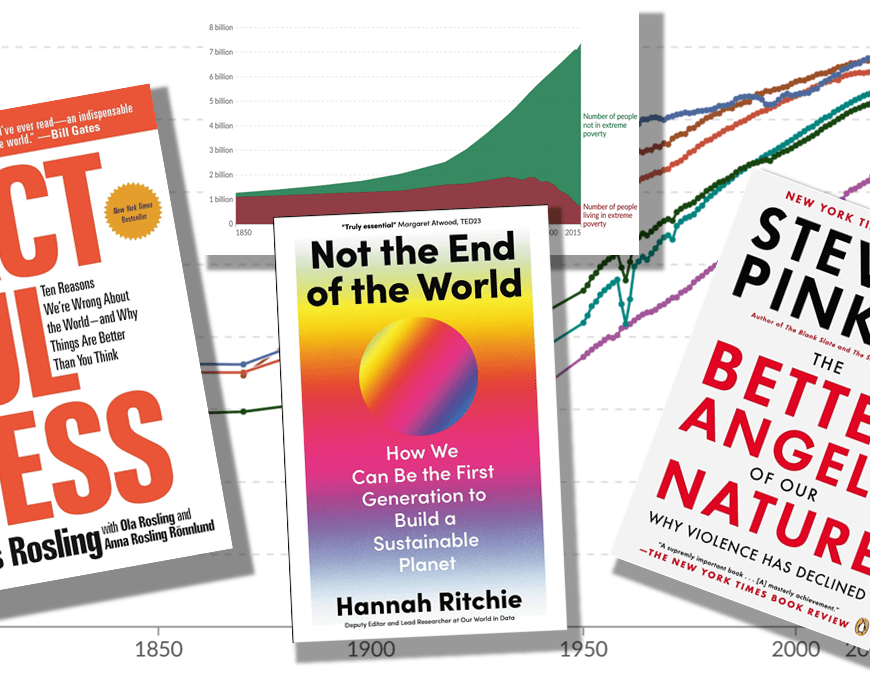
A graph shows the number of people living in extreme poverty from 1850 to 2015. The absolute number of people living in extreme poverty increased gradually until the 1990s and then dropped sharply. (the chart is from Our World in Data)

Bill Gates’s new view on climate change is irrational

Bill Gates published a blog post last week, titled Three tough truths about climate (A new way to look at the problem). He argues that we need to continue funding programs that tackle poverty and health (fine!) but that these funds should come at the expense of programs to mitigate climate change, which he claims won’t be so bad. I look into his motivation for such a misguided proposal that does nothing for the Global South. Continue reading Bill Gates’s new view on climate change is irrational

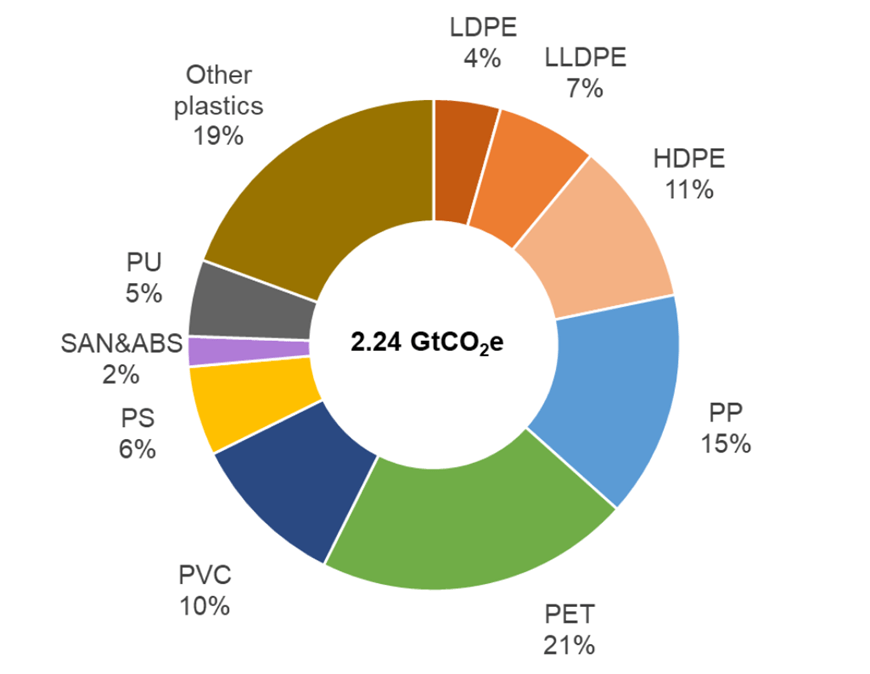
The carbon footprint of plastic production. A donut chart shows greenhouse gas emissions from plastic production in 2019 with a breakdown by plastic polymer type. Total GHG emissions are estimated at 2.24 billion tonnes CO2 equivalents. The plastics contribute to this total roughly in proportion to the amount of each plastic produced per year. Major contributors are polyethylene terephthalate (PET), polypropylene (PP), high-density polyethylene (HDPE), and polyvinyl chloride (PVC).

The astonishing carbon footprint of plastic production

Last year, scientists from Lawrence Berkeley National Lab reported that the carbon footprint of plastic production is around 2.2 billion tonnes of CO2-equivalents. That’s more than double previous estimates, amounting to more than 4% of global greenhouse gas emissions. If the plastics industry continues to grow at the current rate, it will be one of the biggest drivers of climate change by 2050. Continue reading The astonishing carbon footprint of plastic production