

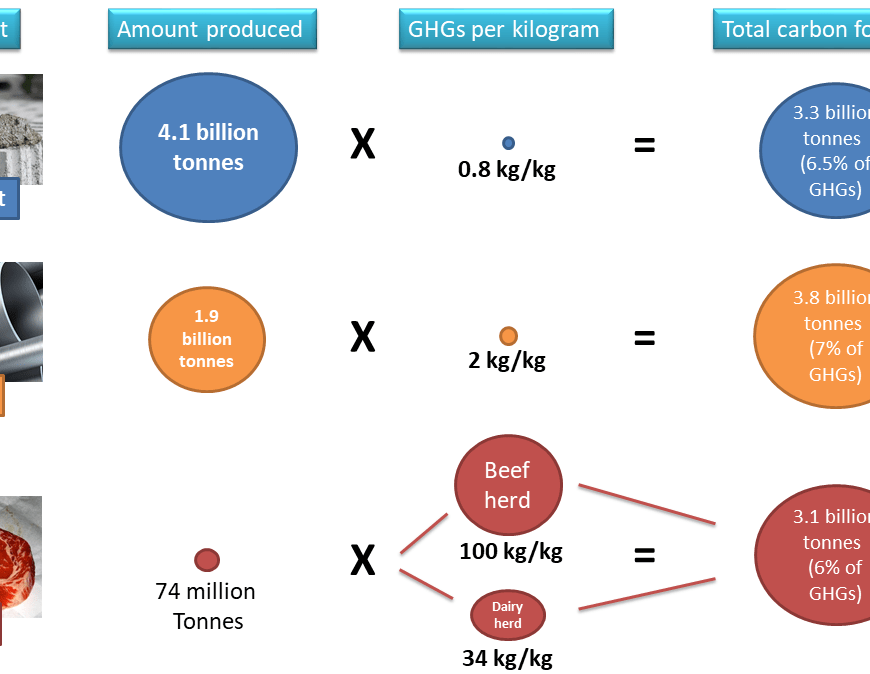
Perspective on the carbon footprints of steel, cement, and beef
Globally, we produce way less beef compared to steel and cement and yet the beef industry’s total carbon footprint is as large* as that of the other two industries. This is because the carbon footprint of beef, per kg of product, eclipses virtually everything else on the planet. The “carbon footprint multiplier” for beef is 100 while for cement and steel it’s around 0.8 and 2, respectively. While plans are in progress to decarbonize cement and steel, we need to put beef in perspective.
*It’s actually a lot larger if we factor in carbon sequestration on land formerly used for beef.
Continue reading Perspective on the carbon footprints of steel, cement, and beef

 The Green Stars Project